WBUR and Boston Globe Spotlight Primary Care Access Problems Based on MHQP Data
(April 2024)
MHQP is pleased to have played a key role in providing data and contacts to help create three recently published prominent stories about the critical issue of primary care access in Massachusetts.
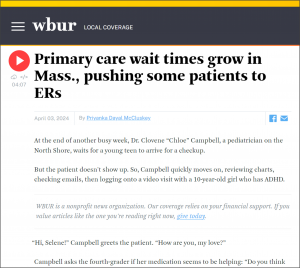
Thanks to Priyanka Dayal McCluskey of WBUR for a terrific story on April 3rd focused on about the current crisis in primary care access in Massachusetts. MHQP’s CEO, Barbra Rabson, contributes significantly to the discussion. Click HERE or on the image above left to listen to or read the WBUR story.
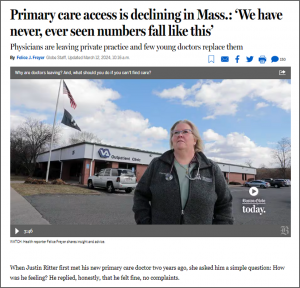
Many thanks also to Felice Freyer, whose March 12th article in the Boston Globe on the same topic also prominently featured Barbra and other MHQP data and stakeholders. Click HERE or on the image above right to read the Boston Globe story. Please note that Globe story is behind a paywall.
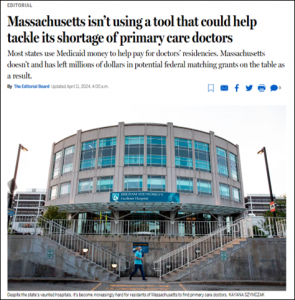
The Boston Globe also featured MHQP and CHIA data in an editorial on April 11th that recommends Massachusetts tap into Medicaid money to help address the primary care provider shortage in our state. According to the editorial, Massachusetts is one of only seven states that does not use Medicaid money to fund medical residencies, and is the only state among the 10 states with the most teaching hospitals and physician residents that does not use Medicaid money to support graduate medical education.
Click HERE or on the image below to read the editorial. Please note: this Globe editorial is also behind a paywall.